Original article: Dr Sara Llorens, translated with AI.Read the original in Spanish
Behavioural chain analysis: what is it for?
Like dominoes: behavioural chain analysis identifies each step that leads to a problem behaviour so it can be stopped earlier. With a real case.
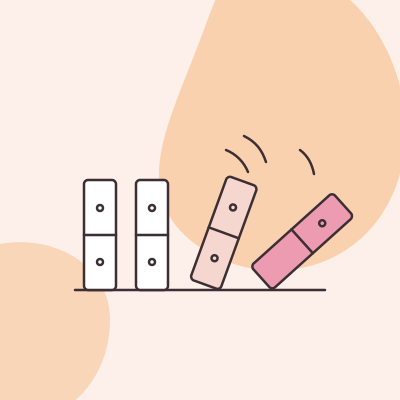
Chaining, or behavioural chain analysis, is a therapeutic strategy that aims to analyse the sequence of steps that lead a person to carry out a behaviour “x”, which in a therapy context is usually dysfunctional or problematic. It’s like a row of dominoes: you knock one over and all the rest follow. Well, the aim of chain analysis is to identify which dominoes fell, and why, until the whole row came down. By identifying the sequence of steps that lead the patient to the problem behaviour, we can come up with strategies to prevent it next time. The sooner we stop the dominoes falling, the better for everyone.
So what do we need to identify?
-
The person’s vulnerability factors: the situations, traits, thoughts, problems… that are part of the person and/or their life and that make them more likely to engage in the problem behaviour.
-
The triggering situation (the first domino).
-
The links (all the dominoes that follow): the situations, emotions, sensations and thoughts that form part of the sequence and help bring the person to the problem behaviour.
-
The problem behaviour (the last domino): the one the person can’t stop themselves from doing and which, although it may bring relief or make them feel better at first, is harmful in the medium/long term and worsens the underlying problem. Examples of problem behaviours: someone with alcoholism having a drink; compulsions in OCD; getting into bed and abandoning all the day’s tasks in depression; doing a couple of lines in cocaine addiction; bingeing in bulimia; self-harming (which can occur across different problems)… to give just a few examples.
-
Consequences: it’s important to analyse the positive and negative consequences of the problem behaviour, both in the short and medium term. If the behaviour has no negative consequences (what behavioural psychology calls “punishment”) or if it is positively reinforced, the likelihood of it happening again increases dramatically.
Now I’ll give you the example of a patient so you can see all of the above in a real case. María, aged 22, comes to therapy for bulimia nervosa. Her binges (followed by vomiting 95% of the time) tend to happen mainly when she’s having problems with her boyfriend (they have quite a few problems in their relationship) and when she’s home alone. Last Friday she had her most recent episode of bingeing + vomiting.
Vulnerability: the patient’s low self-esteem, a problematic relationship, a small social circle that isn’t very supportive.
Triggering situation: thoughts about failing at university and, as a result, thoughts about failing in general.
Links:
- On Friday she woke up nervous because she had an exam at university and didn’t feel prepared.
- She came out of the exam feeling it hadn’t gone well.
- She texted her boyfriend to tell him how she felt, but he didn’t reply until hours later.
- María had the whole afternoon free and went home, where she knew she’d be alone until 8 pm.
- Before going up to her flat, she went into the supermarket intending to buy food to binge on.
Problem behaviour: María ate a whole box of biscuits, a jar of chocolate spread, half a baguette and drank half a bottle of milk.
Consequences: relief first (positive reinforcement), then guilt and a sense of failure (punishment). There were no other consequences from her environment because nobody in her family had found out, which in itself can become positive reinforcement for repeating the problem behaviour. When she told me what had happened, we discussed it together and decided to tell her parents in order to tighten stimulus control around the money/card María carries day to day and her schedule, so that she isn’t left alone. This had been done before, but over the weeks it had slipped because María had been doing better for a while.
Chain analysis is useful and applicable to any case, because it doesn’t focus on one specific disorder or problem but on problem behaviours in general. Ultimately, it’s about helping the patient develop prevention strategies and build skills for the circumstances in which they feel weak or vulnerable.